
Hair Growth at a Standstill: Why Has Your Hair Stopped Growing, and How Can You Get It Growing Again?
Why Does Hair Stop Growing? Causes of a Shortened Hair Growth Phase
Personal experience, hormonal changes, genetics, stress and ways to care for your hair.
What Does It Mean When Hair Stops Growing?
When hair stops growing to its usual length, this may be related to a shortened growth phase. The hair seems to reach a certain point and then stop. I experienced this myself: for years, my hair stayed the same length and even began getting shorter without my cutting it. At first, I thought it was caused by breakage because I found several broken strands every day. Later, however, I realised that the problem was not just a few broken hairs, but that new hairs were growing for an increasingly short time before falling out.
Main Causes of a Shortened Hair Growth Phase
Several factors can affect and shorten the hair growth phase. The main causes include:
Hormonal Imbalance and Its Effect on Hair Growth
Hormonal imbalance can significantly affect hair growth and health. Hormones regulate many bodily functions, including the hair growth cycle. An imbalance can therefore lead to hair loss, thinning or changes in hair texture. Here is an overview of how different hormonal changes can affect your hair:
Puberty
Puberty is a period of dramatic hormonal changes. In boys, testosterone levels rise, and some testosterone is converted into dihydrotestosterone (DHT). DHT can cause hair follicles to shrink, leading to thinning hair or even the early signs of androgenetic alopecia (male-pattern hair loss). In girls, hormonal imbalance during puberty can lead to increased hair shedding, an oily scalp or excessive hair growth in unusual areas.
Pregnancy
During pregnancy, oestrogen levels rise significantly, which can keep hair in the growth phase (anagen) for longer. This makes hair appear fuller and thicker. After childbirth, however, oestrogen levels fall, often leading to postpartum hair shedding (telogen effluvium). This condition is temporary, but it can be very stressful, as women may notice substantial hair loss for several months after giving birth.
Menopause
Menopause is another period of major hormonal changes. Oestrogen and progesterone levels decrease, while androgen levels (male hormones) may remain relatively high. This shift can contribute to hair thinning or female-pattern hair loss. Hair may also become drier and more fragile as sebum production decreases.
Thyroid Problems
The thyroid gland produces hormones that regulate metabolism and also influence hair health. Hypothyroidism (an underactive thyroid) can cause thinning and brittle hair, while hyperthyroidism (an overactive thyroid) can lead to hair loss. Both conditions can also leave hair looking dull and lifeless. Nutrient deficiencies: A lack of essential nutrients, such as vitamins and minerals, may slow hair growth. B vitamins, zinc, iron and protein are particularly important.
Genetically Shortened Hair Growth Phase
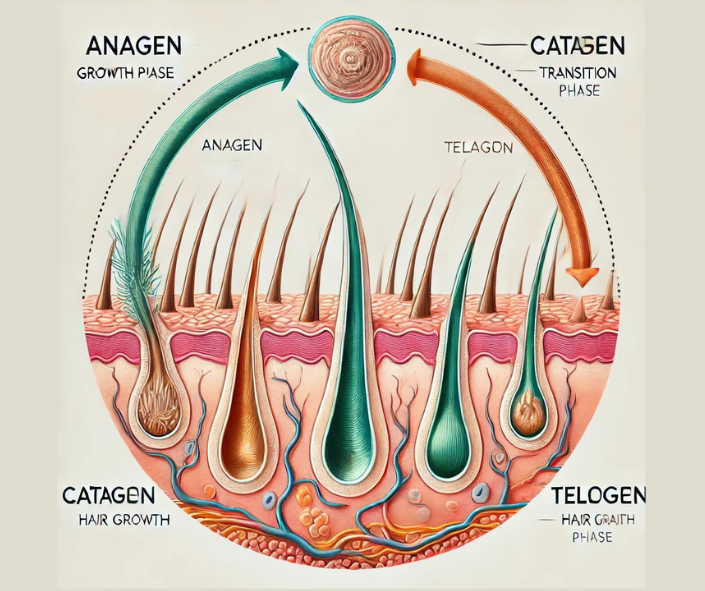
The hair growth cycle consists of three phases: anagen (growth), catagen (transition) and telogen (resting and shedding). In most people, the anagen phase, during which hair grows actively, lasts several years (usually 2–7 years). When this phase is genetically shortened, hair may only reach a certain length before shedding.
This condition is often hereditary and may become noticeable at a young age. People with this genetic predisposition may find that their hair never reaches their desired length or begins to thin relatively early in life.
Stress and Its Effect on Hair Loss
Stress is a natural response to challenging situations, but when it becomes chronic, it can have serious negative effects on our health, including hair health. Chronic stress affects many bodily functions and can contribute to various hair problems, including shedding and a shortened growth phase.
How Does Stress Affect Hair?
Telogen effluvium: One of the most common ways stress affects hair is through a condition called telogen effluvium. In a normal hair cycle, most hairs are in the anagen (growth) phase, while a smaller proportion are in the telogen (resting) phase, when hair stops growing and prepares to shed. Chronic stress can cause a large number of hairs to move into the telogen phase around the same time. The result is sudden, noticeable hair shedding that may appear several weeks to months after a stressful event.
Shortening of the growth phase (anagen phase): Stress can also shorten the hair growth phase, meaning that hair may not reach its maximum length before entering the telogen phase prematurely. This can contribute to thinning because fewer hairs remain in the active growth phase.
Hormones and stress: Stress affects hormone production, particularly cortisol, known as the “stress hormone”. Elevated cortisol levels can disrupt the body’s normal hormonal balance and may negatively affect hair follicles. Stress may also influence androgen levels, which are associated with hair loss, especially in people prone to androgenetic alopecia.
Autoimmune reactions: In some cases, stress may trigger or aggravate autoimmune conditions such as alopecia areata, in which the immune system attacks hair follicles, causing sudden hair loss in small patches.
What Do We Recommend?
If you have noticed that your hair seems to have stopped growing, we recommend MILVA products designed to support healthy hair and scalp care:
Milva Quinine Hair Water: This product is designed for scalp care and to support the appearance of healthier hair. Quinine is commonly used in hair care products intended for thinning or weakened hair.
Milva Quinine and Caffeine Shampoo: Helps care for weakened hair and roots. Its formula combines quinine and caffeine for a targeted hair care routine.
Milva Quinine and Almond Oil Hair Mask: This mask provides intensive care, nourishing hair and helping protect it from damage. It combines quinine with almond oil for hair that feels stronger and better conditioned.
Milva Quinine Shampoo: Regular use helps care for weakened hair and keeps the scalp and hair clean. Suitable for everyday use as part of a consistent hair care routine.
For the best results, we recommend using these products consistently as part of a complete hair care routine, while also paying attention to your overall health. A healthy lifestyle, managing excessive stress and getting enough vitamins and minerals are important too.
If you have any further questions or need help choosing products, please do not hesitate to contact us. We are here to help you work towards healthy, beautiful, longer-looking hair!
Discussion (0)
Be the first who will post an article to this item!